
The Case For Unisex Training
There is a school of thought that says women need to train differently from men. Some claim that women should structure their workouts according to their menstrual cycles and others recommend special training programs for perimenopausal and postmenopausal women. These are not unfounded claims, by the way. Muscular adaptations to training can affect (and be affected by) hormones in ways that are specific to males and females. In this article, I will be taking a look at what the scientific literature has to say about all of the above.
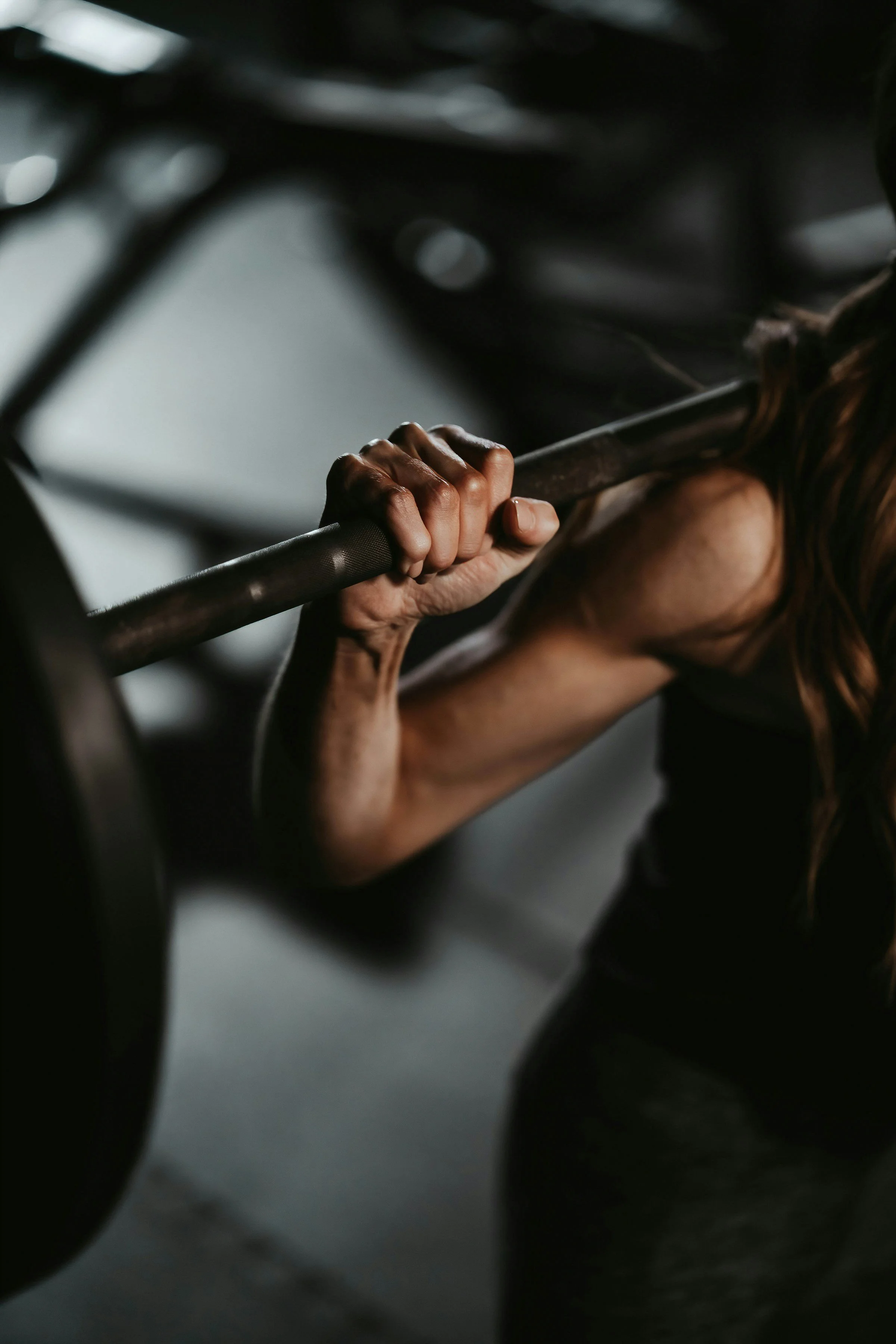
The idea that men grow more muscle than women (and do so at the drop of a hat) is quite pervasive.
There is also a widely-held belief that female hormonal fluctuations during the menstrual cycle can significantly affect both training performance and the ability to adapt positively to the demands of a workout.
Unfortunately, these beliefs have led many exercise scientists to routinely recruit male participants when conducting studies, leading to the reliance on assumptions in relation to female physiology and exercise. This has also resulted in the unnecessary creation and popularisation of specialised training programs for women.
When it comes to the rate at which men gain muscle compared to women, the science is clear.
A systematic review with Bayesian meta-analysis of 29 studies (conducted by Refalo and colleagues in 2025) found no significant difference in muscle growth between men and women when they both engaged in resistance training (PMID: 40028215). To put this into greater context, both the amount of muscle gained from baseline and the amount of muscle relative to the size of the participants were taken into account.
A systematic review and meta-analysis of 36 studies (conducted by Hawley and colleagues in 2023) looked at the rate of muscle gain in older men and women and reached a similar conclusion: “no sex-based differences for absolute or relative changes in limb muscle size, muscle fibre size or physical performance”.
When it comes to changes in muscle mass as we age and the interplay with hormones, the differences between men and women are far more subtle than we are often led to believe. Men experience a decline in testosterone and dysregulated oestrogen as they age and women see hormonal changes as they progress towards menopause. Muscle mass plays an important role in the generation of strength and power required for physical independence and quality of life as we age. Muscle is built from birth, peaks at the age of 30 or so, then begins to decline in both men and women from about the age of 40. Decline in muscle mass typically occurs at the rate of 3 to 5 percent per decade until one’s sixties or seventies, when it accelerates to 10 percent per decade.
In addition to all of the above, as both men and women age, they experience:
Fat redistribution in general
Higher accumulation of fat in the abdomen
Loss of bone density
Decreased energy and enthusiasm in general
Decreased desire or ability to exercise
There is absolutely no denying that these are significant challenges but studies show that the usual rules governing muscle gain and fat loss still apply to both sexes - even though they may be difficult to put into practice.
In 2023, an umbrella review was conducted by Colenso-Semple and colleagues (PMID: 37033884). They aimed to examine and critically evaluate the evidence from meta-analyses and systematic reviews on the influence of menstrual cycle phase on acute performance and chronic adaptations to resistance exercise training. They found that men and women experienced equivalent relative gains in muscle size (and, for the most part, strength) in response to resistance exercise. As a result, they concluded that in the absence of high-quality evidence, predetermining training based on cycle phase was ill-advised and could cause a self-fulfilling prophecy to occur. This means that the mere suggestion that women might have a less-than-ideal experience in the gym (as a result of where they are in their cycle) could cause them to actually have that experience. They recommended that it was best to assess how they felt in the moment during a workout and adjust as necessary - just as a man would.
A subsequent systematic review with meta-analysis conducted in 2024 by Niering and colleagues (PMID: 38251305) attempted to systematically examine the effects of the different cycle phases on strength. They found small to moderate effects of cycle phase on maximal strength, particularly in the late follicular and ovulation phases. The studies included in the review were not of high quality and this undermined the findings.
The most recent study (conducted by Zinner and colleagues in 2025) is titled, No effect of menstrual cycle on maximum dynamic strength in upper and lower body in strength-trained females: a six-arm cross-over study (PMID: 40131348) and, even if the opposite was the case, the study had some limitations including small sample size, single measurements taken for each phase rather than a range and a lack of randomisation of the testing order.
As discussed in a previous article, muscle is absolutely vital to overall health. For this reason, all barriers to entry to its attainment must be removed - especially anything that complicates things needlessly.
Taken together, there simply isn’t enough evidence for women to do anything except:
Ignore generalised guidelines that tell you how you ought to feel during each phase of your cycle.
Pay attention to how you actually feel. If you haven’t slept well, for instance, back off on the intensity of your workout.
Deprioritise cardiovascular exercise. It plays an important role in overall health but can be counterproductive if you do not use it as a strategic supplement to resistance training. For a beginner, I recommend 150 minutes of moderate intensity aerobic exercise a week OR 75 minutes of vigorous aerobic exercise a week OR an equivalent combination of moderate and vigorous aerobic exercise a week.
Prioritise resistance/strength training. Two to three hour-long full-body sessions a week are surprisingly effective for beginners.
Do not skimp on rest. I cannot stress this enough. It is absolutely vital to intersperse your workout days with rest days for optimal recovery and to avoid injury. Optimal sleep and stress management will boost your efforts in this regard.
Work with a professional for all of the above. This way, you can have a comprehensive plan tailored to your unique physiology and goals.
Incorporate non-gym movement into your daily routine. This includes gardening, housework, breaking up long periods of sitting with stretching breaks and aiming for 8,000 to 10,000 steps a day.